What Is Google Ads & How It Really Works in 2026
Introduction: Exactly What is Google Ads?
If you are trying to grow a business online today, you have probably asked yourself: exactly what is Google Ads? At its core, Google Ads is Google’s proprietary Pay-Per-Click (PPC) advertising platform. It allows businesses like yours to bid on specific search terms and instantly appear at the very top of the search results. One of the most common questions from business owners is: what is the difference between SEO and Google Ads? The answer comes down to time and placement. While organic SEO relies on search algorithms to slowly rank your content over months or years, understanding what is Google Ads gives you a strategic shortcut. It allows you to buy your way to the top of page one immediately.
So, why is knowing what is Google Ads so critical for your growth in 2026? Because it remains the most powerful intent-based marketing platform in the world. You aren’t just pushing a digital billboard in front of random people and hoping they care. Instead, by leveraging professional [Google Ads Management Services], you are placing your exact product or service in front of a highly motivated user at the precise second they are actively searching for a solution.
How Does the Google Ads Auction Work?
To truly grasp what is Google Ads and how it generates ROI, you have to look under the hood. So, how does the Google Ads auction work in real time? Every single time a user types a search query into Google, a lightning-fast auction takes place behind the scenes to decide which ads appear and in what order.
Here is exactly how Google determines the winners:
- The biggest budget doesn’t automatically win: A huge misconception about what is Google Ads is the belief that the richest company automatically takes the top spot. Google actually wants to show users helpful results, so they use the Ad Rank formula to balance their ad revenue with a great user experience.
- Your Ad Rank dictates your position: Your placement on the page is calculated by multiplying your maximum bid amount by your Quality Score (while also factoring in the expected impact of your ad extensions).
- Quality Score is your most important lever: Google grades your keywords on a scale from 1 to 10 based on three main Quality Score factors:
- Expected Click-Through Rate (CTR): Historically, how likely are people to click your ad?
- Ad Relevance: Does your ad copy actually match what the person just searched for?
- Landing Page Experience: Does your website load quickly, work well on mobile, and provide the exact solution promised in the ad?
By optimizing these three factors, you can actually pay less per click while outranking a competitor who is bidding far more money than you. That efficiency is the true power behind what is Google Ads.
Exploring the Core Types of Google Ads Campaigns
When beginners ask, “what is Google Ads?” they usually just picture the blue text links at the very top of a standard search page. But to truly understand what is Google Ads, you have to look at the wider ecosystem. Google owns a massive amount of digital real estate, which means there are several types of Google Ads campaigns you can run depending on your specific business goals:
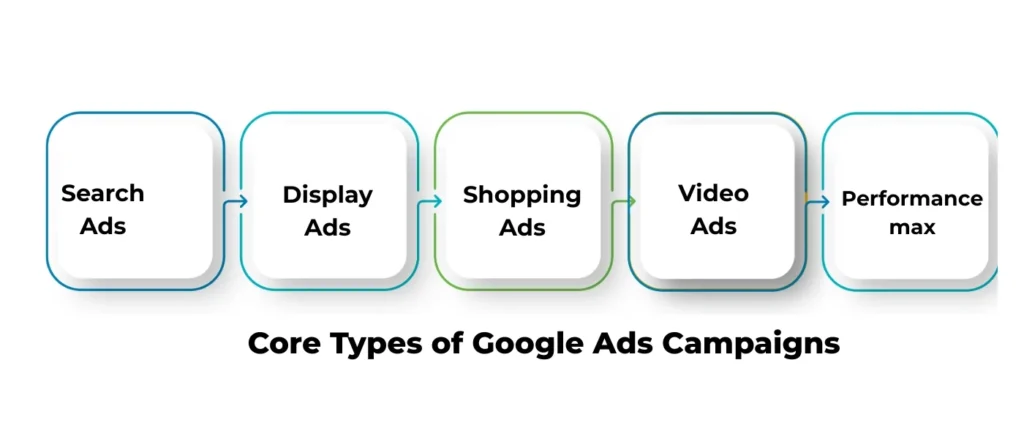
Search Network: These are the classic, high-intent text ads that appear when someone actively types a query like “emergency plumber near me.”
Display Network: Instead of text, these are visual, image-based ads that follow users across millions of partner websites and apps. It is perfect for building visual brand awareness and retargeting people who previously visited your website but didn’t buy.
Google Shopping Ads: For e-commerce brands, understanding what is Google Ads means mastering these highly visual product listings. They feature images, prices, and reviews that show up right at the top of the search results, driving users directly to your checkout page.
Video Ads: If your focus is building trust through movement and sound, these allow you to run pre-roll and mid-roll commercials directly on YouTube, which is the second-largest search engine in the world.
Performance Max (PMax): Finally, we have to talk about how Performance Max (PMax) campaigns work in 2026. This is Google’s heavily automated, AI-driven campaign type. Instead of building separate campaigns for search, display, and video, PMax allows you to upload all your assets into one place. Google’s machine learning then automatically mixes, matches, and places those ads across all its networks simultaneously to find the cheapest conversions.
The Alphabet Soup: Understanding Key Google Ads Metrics
Mastering what is Google Ads isn’t just about writing catchy headlines and uploading images; it requires knowing how to read the data. The platform provides a mountain of analytics, which can feel like an overwhelming alphabet soup at first. But to evaluate if your campaigns are actually making money, you only need to focus on a few core metrics:
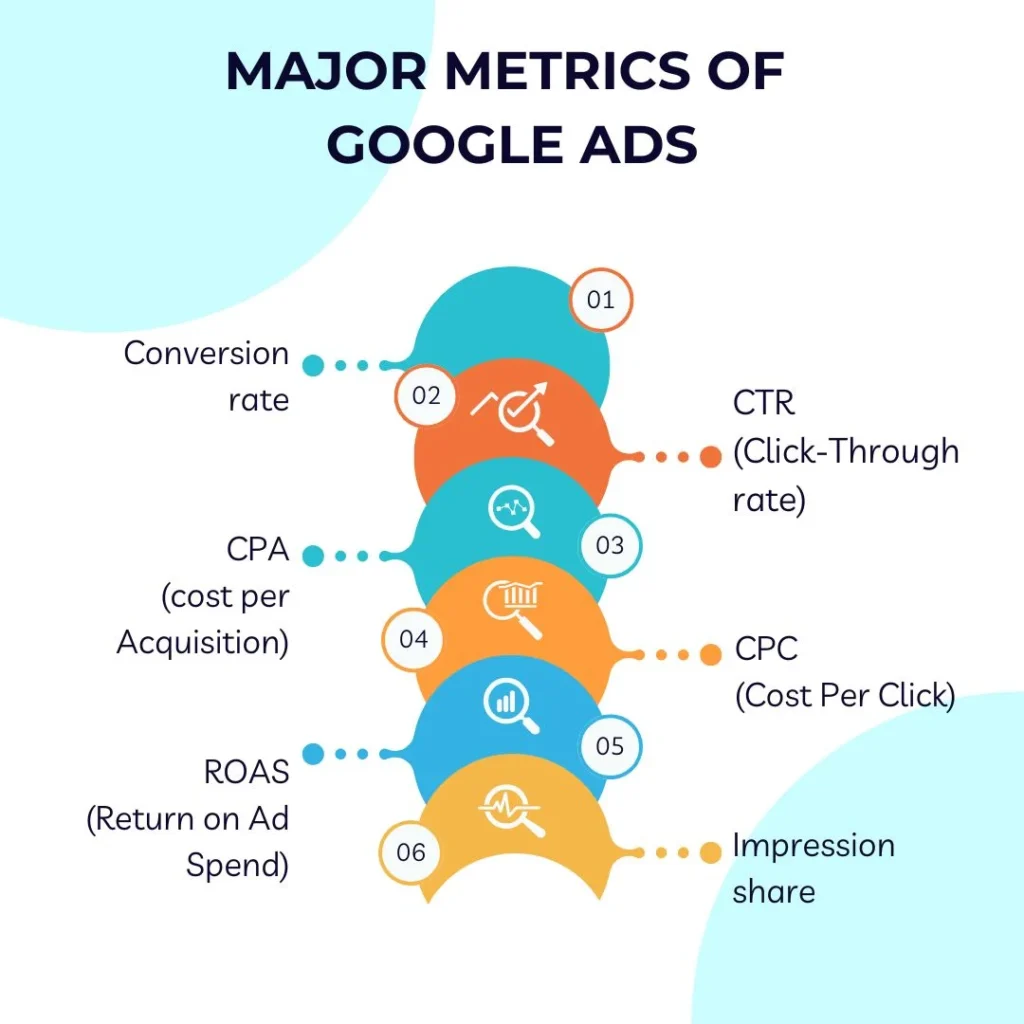
- Cost Per Click (CPC): This is simply the actual price you pay every time a user clicks your ad.
- Click-Through Rate (CTR): Your CTR is the percentage of people who saw your ad and decided to click it. A high CTR tells Google your ad is highly relevant, which boosts your Quality Score and actively lowers your CPC.
- Cost Per Acquisition (CPA): Clicks don’t pay the bills sales do. That is why understanding what is Google Ads ultimately comes down to tracking your CPA. This metric tells you exactly how much ad spend it takes to generate one actual lead or sale. (If you want to dive deeper into how this impacts your bottom line, check out our guide on the difference between Cost Per Result vs Cost Per Acquisition).
- Return on Ad Spend (ROAS): Finally, for e-commerce businesses, this is the holy grail metric. If you spend $1,000 on ads and generate $5,000 in sales, your ROAS is 500%.
Knowing exactly what is Google Ads doing for your revenue comes down to tracking these conversion metrics flawlessly.
Why Your Business Needs to Know What is Google Ads in 2026
Let’s talk about the ROI factor. When business owners ask, “what is Google Ads going to do for my bottom line?” the answer comes down to measurable, scalable results. Traditional marketing methods like billboards or print ads are notoriously difficult to track. But with this platform, you can track every single penny you spend right down to the specific keyword that triggered a sale. Understanding what is Google Ads also gives you an unmatched advantage when it comes to the speed of results. While organic SEO is a fantastic long-term play, it can take months to rank on page one. With paid search, you can launch a brand-new campaign today and start generating high-quality leads tomorrow. In 2026, the platform is smarter than ever. By utilising AI-driven Smart Bidding and feeding the system precise first-party data tracking, the algorithms do the heavy lifting for you. They actively seek out users who are most likely to convert, ensuring your budget is spent efficiently. Grasping what is Google Ads means unlocking a predictable, controllable pipeline of revenue for your business.
Conclusion: Mastering What is Google Ads for Your Brand
Understanding the basics of what is Google Ads is just the first step in your journey. While the platform makes it easy to set up a campaign, ongoing, rigorous optimization is what actually drives long-term profit. You have to constantly test your ad copy, refine your bids, and update your keyword lists to stay ahead of the competition.
Ready to take control of your digital growth? Dive into our complete Google Ads Checklist 2026 for a step-by-step optimization playbook, or reach out to our team directly for professional Google Ads management services that turn clicks into consistent clients.
Is Google Ads better than SEO?
They serve different purposes. Google Ads delivers instant visibility through paid placements, while SEO builds long-term organic traffic. The strongest strategy combines both.
What is Smart Bidding in Google Ads?
Smart Bidding uses machine learning to automatically adjust bids based on the likelihood of conversion, helping maximize results within your budget.
Can small businesses benefit from Google Ads?
Yes. With proper targeting and budget control, small businesses can compete effectively by focusing on high-intent, local, or niche keywords.
What types of ads can I run on Google?
You can run Search Ads, Display Ads, Shopping Ads, Video Ads on YouTube, and Performance Max campaigns across multiple Google properties.
How quickly can I see results from Google Ads?
Traffic can start immediately after launch, but meaningful performance data typically takes 2–4 weeks as campaigns gather optimization signals.
