
YouTube Shorts vs Long Videos: Which Can Earn More?
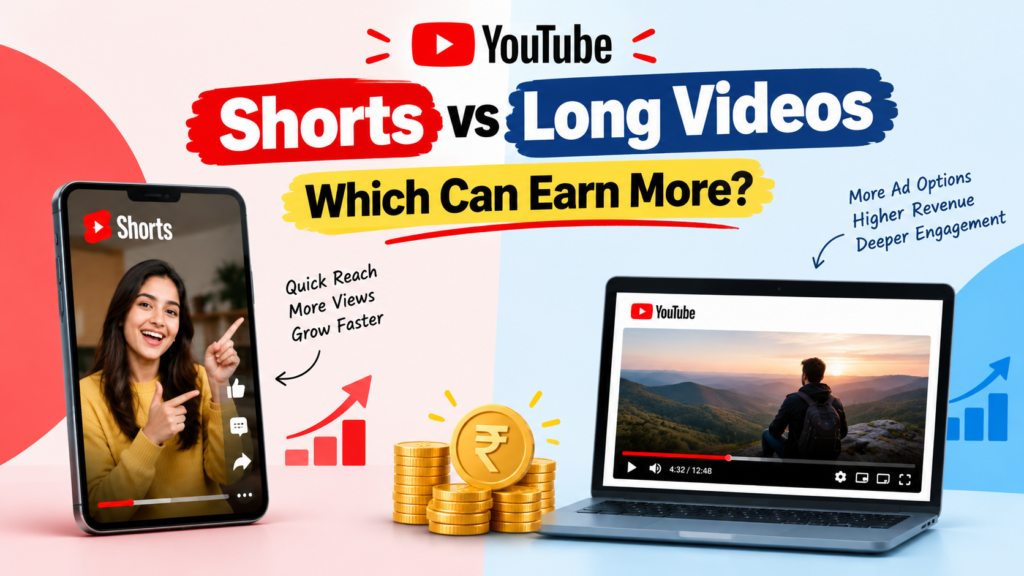
If you are planning to make money on YouTube, one important decision is whether to focus on YouTube Shorts or long-form videos. Both formats can help creators grow an audience and generate revenue, but they work differently when it comes to monetization, watch time, and audience engagement.
Understanding YouTube Shorts vs long videos can help you choose a content strategy that matches your goals.
YouTube Shorts vs Long Videos: What’s the Difference?
YouTube Shorts are short-form vertical videos designed for quick consumption. They can help creators reach new audiences quickly because viewers can discover them through the Shorts feed.
Long-form YouTube videos are typically several minutes or longer and provide more space for detailed content, tutorials, reviews, interviews, and educational videos.
The major difference is not simply video length. The two formats have different viewing experiences and monetization models.
Can YouTube Shorts Earn Money?
Yes, eligible creators can earn revenue from YouTube Shorts. However, Shorts monetization works differently from traditional long-form videos.
Revenue generated from ads shown between Shorts is pooled and distributed among eligible creators based on factors such as their share of eligible Shorts views. Because the advertising experience is different from long-form videos, the revenue earned per view can also be different.
This means getting millions of Shorts views does not necessarily translate into the same advertising income that millions of long-form views could generate.
Shorts can still be valuable because they can help increase subscribers, reach, and awareness for a channel.
Can Long Videos Earn More?
Long-form videos can provide more opportunities for advertising because eligible videos can have ads served around the content, and eligible videos of sufficient length can also use mid-roll ads.
The actual amount a creator earns depends on factors such as audience location, niche, advertiser demand, video length, watch time, and RPM.
For example, a detailed finance, technology, education, or business video may attract advertisers with higher-value campaigns than some entertainment content. Therefore, the same number of views can generate different revenue depending on the channel.
YouTube Shorts vs Long Videos: Which Is Better for Income?
There is no fixed earning amount for either format. However, long-form videos can offer stronger direct advertising revenue potential per view, while Shorts can be highly effective for increasing reach and attracting new viewers.
Consider a creator who receives a large number of Shorts views but relatively few long-form views. The Shorts may bring substantial exposure and subscribers, while the longer videos may generate a larger share of advertising revenue.
For many creators, using both formats can therefore be more effective than choosing only one.
Shorts vs Long Videos: Key Differences
| Factor | YouTube Shorts | Long Videos |
|---|---|---|
| Format | Short-form vertical | Long-form |
| Discovery | Strong Shorts-feed discovery | Search, recommendations & homepage |
| Watch time | Quick consumption | Longer viewing sessions |
| Monetization | Shorts revenue-sharing model | Traditional video advertising |
| Content depth | Limited | More detailed |
| Audience growth | Can be rapid | Often more gradual |
| Revenue potential per view | Generally lower | Generally higher |
How to Use Both Formats
Instead of treating Shorts and long videos as competitors, creators can use them together.
For example, a creator could publish a detailed 10-minute tutorial and then create several Shorts from the same topic. The Shorts can introduce the subject to new viewers, while the long-form video provides the complete information.
This approach can help creators build both reach and deeper audience engagement.
Final Thoughts
When comparing YouTube Shorts vs long videos, the better format depends on your objective. Shorts can be useful for fast reach, discovery, and audience growth, while long-form videos can provide more opportunities for detailed content and advertising revenue.
If your primary goal is earning from YouTube, don’t focus only on view count. Track metrics such as RPM, watch time, audience retention, subscribers, and revenue.
For many creators, combining Shorts for discovery with long-form videos for deeper engagement and monetization can create a more sustainable YouTube strategy.
