Traditional SEO vs GEO: What Businesses Need to Know in 2026
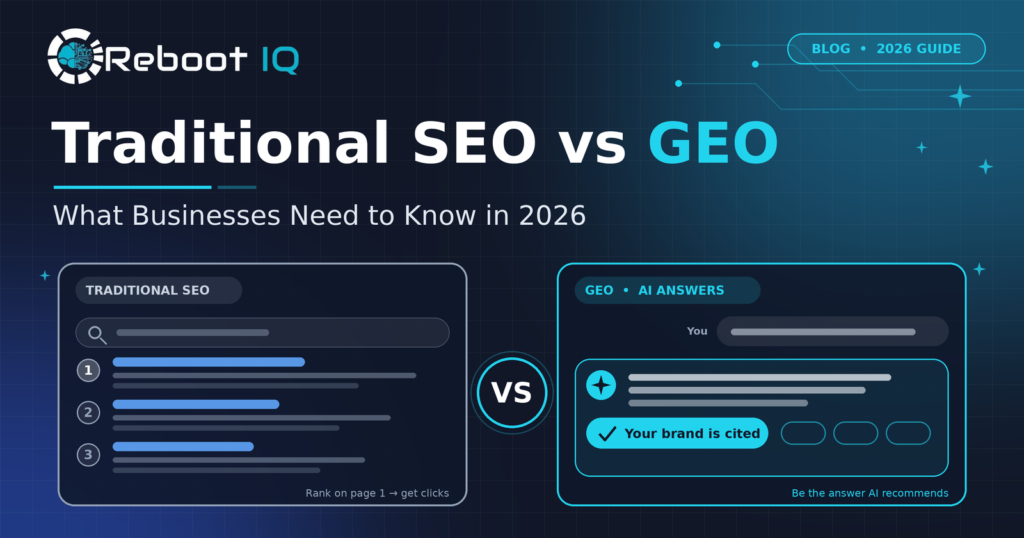
The digital marketing industry is changing rapidly in 2026.Compare Traditional SEO vs GEO – What Businesses Need to Know in 2026 & get practical insights to improve brand visibility on search engines and AI platforms. Businesses are no longer depending only on traditional search engines to attract customers. With the growth of artificial intelligence, people are increasingly using ChatGPT, Google Gemini, and Perplexity to discover information, compare services, and find business recommendations. This change has introduced a new digital marketing approach called Generative Engine Optimization (GEO). Understanding Traditional SEO vs GEO is becoming important for businesses that want to improve their online visibility and reach more potential customers. Traditional SEO focuses on improving website rankings in search engine results, while GEO focuses on making brand information visible in AI-generated answers.
What Is Traditional SEO?
Traditional Search Engine Optimization (SEO) is the process of improving a website’s visibility on search engines such as Google and Bing. It helps businesses attract organic website traffic by optimizing website content, technical performance, keywords, and backlinks.
Traditional SEO includes several important activities:
- Keyword Research: Finding relevant keywords that potential customers use when searching online.
- On-Page SEO: Optimizing page titles, headings, meta descriptions, images, and website content.
- Technical SEO: Improving website speed, mobile responsiveness, indexing, and website structure.
- Off-Page SEO: Building quality backlinks and improving website authority.
- Local SEO: Helping businesses appear in location-based searches.
- Content Marketing: Publishing informative blogs and website content.
Traditional SEO remains an important digital marketing strategy because search engines continue to help customers discover businesses, products, and services.
What Is Generative Engine Optimization (GEO)?
Generative Engine Optimization (GEO) is an approach to improving brand and content visibility in AI-generated responses. Unlike traditional search engines that display a list of website links, generative AI platforms provide conversational answers based on information gathered from different sources. GEO focuses on creating useful, trustworthy, and informative content that AI-powered systems can understand and potentially reference.
Important GEO practices include:
- Creating original and helpful website content.
- Answering common customer questions.
- Building brand authority and online reputation.
- Using clear headings and structured information.
- Maintaining consistent business details.
- Publishing relevant industry information.
- Getting genuine brand mentions from trusted websites.
Understanding Traditional SEO vs GEO helps businesses prepare for changing search experiences and improve their chances of being discovered across different platforms.
Traditional SEO vs GEO: Key Differences
Both strategies help businesses improve online visibility, but their optimization approaches are different.
| Factors | Traditional SEO | GEO |
| Main goal | Improve search rankings | Improve AI answer visibility |
| Platforms | Google and Bing | ChatGPT, Gemini and Perplexity |
| Content | Keyword-focused and helpful | Context-rich and informative |
| Visibility | Search engine results | AI-generated answers |
| Authority | Backlinks and website credibility | Brand reputation and trusted references |
| User behavior | Clicks website links | Receives conversational answers |
| Measurement | Rankings, traffic and conversions | AI mentions, citations and referral traffic |
The main difference between Traditional SEO vs GEO is how businesses approach online discovery. Traditional SEO helps websites appear in search engine results, while GEO focuses on improving brand visibility in AI-powered search experiences. Businesses should consider both approaches instead of depending on only one strategy.
Why Is GEO Important for Businesses in 2026?
AI technology is changing how people search for information. Customers increasingly use conversational questions to find products, services, and recommendations. Here are some reasons why Generative Engine Optimization (GEO) is becoming important.
1. Growth of AI Search Platforms
AI platforms are changing how users discover information. Businesses should create helpful content that clearly explains their products and services.
2. Changing Customer Search Behavior
Customers are moving beyond short search queries and asking detailed questions. GEO encourages businesses to provide direct and informative answers.
3. Better Brand Visibility
A strong digital presence can help businesses become more recognizable across search engines and AI-powered platforms.
4. Building Online Authority
Publishing valuable content, maintaining accurate information, and earning genuine industry mentions can strengthen brand credibility.
5. Preparing for Future Search Trends
As AI-powered search continues to develop, businesses should understand how GEO can complement their existing SEO strategies.
SEO vs AI Search Optimization: Which Is Better?
When comparing SEO vs AI Search Optimization, businesses should understand that both strategies offer different benefits. Traditional SEO is useful for improving Google rankings, attracting organic traffic, and generating website enquiries. AI search optimization focuses on improving the chances of brand information being discovered through AI-generated responses. Therefore, SEO vs AI Search Optimization should not be treated as a competition. Combining both approaches can support a more complete digital marketing strategy.
Top Strategies to Improve SEO and GEO in 2026
Businesses can follow these practical strategies to improve their search visibility.
1. Create High-Quality Content
Publish informative blogs, service pages, and guides that answer customer questions. Use your primary and secondary keywords naturally throughout the content.
2. Focus on Search Intent
Understand what customers want when they search for a particular keyword. Create content that provides relevant answers and useful information.
3. Optimize Website Performance
Improve website speed, mobile responsiveness, navigation, internal linking, and technical SEO to provide a better user experience.
4. Build Brand Authority
Publish industry-related content, collect genuine customer reviews, and earn relevant mentions from trustworthy websites.
5. Use Structured Data
Implement relevant schema markup, such as Organization, LocalBusiness, Article, and Product schema, wherever appropriate. Structured data helps search engines understand website information.
6. Include Frequently Asked Questions
Add useful FAQs to your website and blog articles. Provide direct answers to common questions about your products and services.
7. Monitor SEO and GEO Performance
Use Google Search Console and website analytics to monitor organic traffic, keyword performance, and conversions. Also track available AI referral traffic, brand mentions, and citations.
These practices help businesses build a balanced strategy for Traditional SEO vs GEO.
Common SEO and GEO Mistakes to Avoid
While implementing Generative Engine Optimization (GEO) and traditional SEO, businesses should avoid these common mistakes:
- Keyword Stuffing: Repeating keywords excessively can affect content readability.
- Low-Quality Content: Publishing unhelpful or duplicate content does not provide value to users.
- Ignoring Technical SEO: Website speed, mobile usability, and indexing are important.
- Missing Brand Information: Keep business details accurate and consistent across online platforms.
How Rebootiq Infotech Helps Businesses Grow Online
Rebootiq Infotech helps businesses improve their digital presence through modern SEO and digital marketing solutions. As search technology evolves, businesses need strategies that support traditional search visibility and prepare for AI-powered discovery.
Our services include:
- SEO Services: Improve organic traffic, keyword rankings, and website visibility.
- Local SEO: Help businesses connect with customers through location-based searches.
- Social Media Marketing: Build brand awareness and customer engagement.
- Google Ads: Reach potential customers through targeted advertising.
- Meta Ads: Generate leads through Facebook and Instagram campaigns.
- Website Development: Create professional and responsive business websites.
- UI/UX Design: Improve website usability and customer experience.
Future of Traditional SEO vs GEO
The future of search will involve traditional search engines, AI assistants, conversational search, and other emerging digital technologies. Traditional SEO will continue to play an important role in organic search visibility, while Generative Engine Optimization (GEO) will become an increasingly relevant part of digital marketing. Businesses that invest in useful content, website performance, brand authority, and customer-focused optimization will be better prepared for changing search behavior.Understanding Traditional SEO vs GEO and implementing effective SEO vs AI Search Optimization strategies can help businesses strengthen their online presence in 2026 and beyond.
Conclusion
Traditional SEO and GEO are two important approaches to modern digital visibility. While traditional SEO focuses on search engine rankings and organic traffic, GEO focuses on improving brand visibility in AI-generated answers. Businesses should not choose one over the other. Combining Traditional SEO vs GEO strategies can help improve online discovery, strengthen brand credibility, and attract potential customers through multiple digital channels. If you want to improve your website rankings, increase organic traffic, and prepare your business for AI-powered search, RebootIQ Infotech can help. To know more about us. Click:https://rebootiq.com/
