B2B Marketing Trends 2026 India
What You Need to Know
B2B marketing in India has changed more in the last three years than it did in the previous decade. Buying committees are bigger, research happens quietly online, and decision‑makers expect consumer‑grade digital experiences even for complex deals.
In 2026, b2b marketing trends 2026 are no longer about “the next shiny channel”. They’re about understanding how buyers actually make decisions and building systems that support that journey from first search to signed contract.
At Rebootiq, we work with Indian SaaS, IT, manufacturing and service brands every day. Below are the B2B marketing trends we see driving real pipeline in 2026 – and how you can apply them.
1. Intent Signals Beat Raw Leads
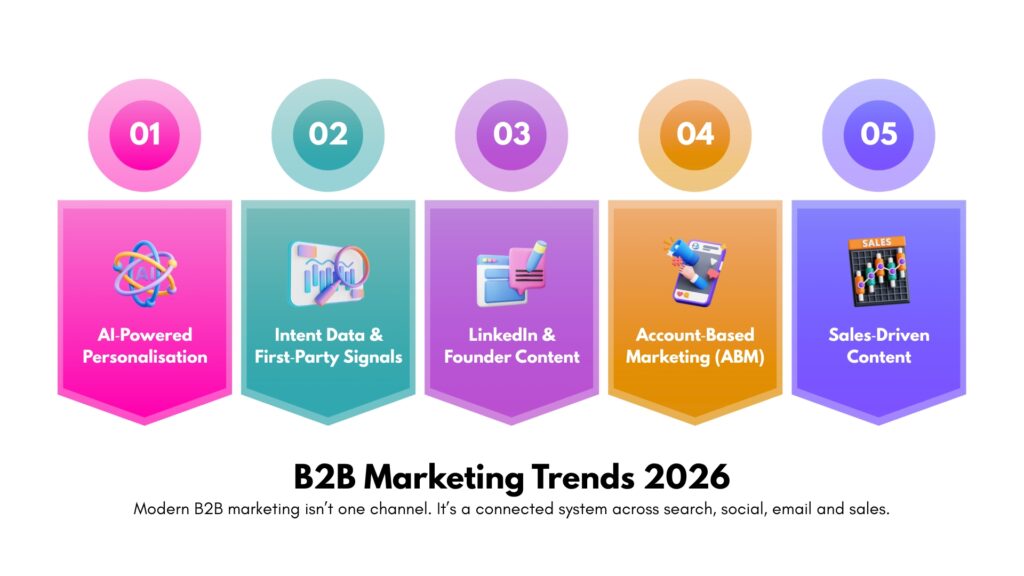
Traditional B2B demand gen obsessed over forms: ebook downloads, webinar sign‑ups, newsletter subscribers. In 2026, the most effective teams treat intent data as the new lead.
Instead of asking “How many people filled a form?”, they ask:
Who is comparing pricing pages and case studies?
Which companies keep returning to high‑value pages?
Which accounts are engaging with our LinkedIn thought leadership?
This shift matters because Indian buying teams often research quietly for weeks before ever booking a demo. When your sales team only speaks to prospects with high intent, close rates improve without increasing media spend.
How to use this trend
Set up tracking for scroll depth, repeat visits and high‑intent URLs on your site.
Sync these signals into your CRM so sales can prioritise hot accounts.
Build simple “intent dashboards” in tools like Google Analytics 4 and Looker Studio.
If you don’t have this infrastructure yet, your b2b marketing trends 2026 roadmap should start with analytics and CRM hygiene.
2. AI‑Powered Personalisation at Scale
Generic “one size fits all” B2B content is disappearing. With AI and marketing automation, it’s now realistic for even mid‑size Indian companies to personalise experiences by industry, role and stage of the funnel.
Examples of AI‑driven personalisation in 2026:
Showing a CTO a technical comparison chart while the CFO sees ROI numbers on the same landing page.
Re‑ordering blog recommendations based on previous topics a user has viewed.
Using AI to generate tailored email nurtures from sales call notes.
Done well, this doesn’t feel creepy; it feels respectful of the buyer’s time. Brands using AI‑powered personalisation report higher engagement and better lifetime value.
How to use this trend
Start simple: dynamic blocks on your website that change by industry or company size.
Use AI tools to generate variants of ads and landing page copy for different personas.
Feed real sales FAQs into AI to create better nurture content, not just generic blogs.
At Rebootiq, our b2b marketing trends 2026 playbooks always include a personalisation layer, even if it’s just for two or three key industries to start.
3. LinkedIn Becomes a Full‑Funnel Channel
LinkedIn has quietly moved from “place to park company updates” to India’s most important full‑funnel B2B marketing channel.
In 2026, top‑performing brands use LinkedIn for:
Awareness – targeted video and carousel ads to ideal accounts.
Consideration – thought‑leadership posts that answer real buyer questions.
Conversion – retargeting engaged visitors with demo and consultation offers.
The biggest unlock, however, is founder‑led and expert‑led content. Indian buyers trust faces more than logos, especially for high‑stakes purchases. Founders and senior leaders who publish consistently on LinkedIn often outperform corporate pages on reach and trust.
How to use this trend
Turn your subject‑matter experts and founders into regular LinkedIn creators.
Use LinkedIn Ads’ account targeting for ABM campaigns.
Repurpose your best posts into blog content and email sequences.
If your LinkedIn activity is still just product updates, you’re leaving a huge b2b marketing trends 2026 opportunity on the table.
4. Account‑Based Marketing (ABM) Goes Mainstream
ABM was once reserved for global enterprises. In 2026, even mid‑market Indian B2B brands are running targeted plays for 50–200 dream accounts.
Instead of blasting broad audiences, teams now:
Build short target account lists by industry and revenue.
Create custom landing pages or mini‑microsites for those accounts.
Coordinate LinkedIn, email, SDR outreach and remarketing around the same message.
This account‑first approach aligns marketing and sales around pipeline, not just MQL volume.
How to use this trend
Start with a pilot list of 50–100 accounts instead of trying to do ABM for everyone.
Create at least one industry‑specific landing page and case study per vertical.
Use remarketing on Meta and Google to stay visible with those accounts between sales touches.
You don’t need enterprise‑level tools to experiment with ABM. A focused list, strong messaging and consistent follow‑up already put you ahead of many local competitors.
5. SEO Shifts from Keywords to Topic Ownership
In previous years, SEO for B2B was about ranking for a few vanity keywords. In 2026, winners focus on owning topics and buying journeys, not just individual terms.
That means building content clusters around:
Problems and symptoms buyers search before they know your solution.
Comparison queries (X vs Y, tools, pricing).
Implementation and success metrics (checklists, calculators, playbooks).
Search engines increasingly reward sites that cover a topic deeply instead of publishing dozens of shallow pages.
How to use this trend
Map your customer journey from “problem aware” to “solution aware” to “vendor aware”.
Build 1–2 strong pillar pages for each stage, supported by blogs and case studies.
Optimise for related phrases and questions rather than repeating the same keyword.
For example, a pillar on b2b marketing trends 2026 could link to detailed posts on ABM, founder‑led content, and AI personalisation. This cluster approach helps you own the conversation, not just rank once.
6. Sales & Marketing Finally Share the Same Content
One of the most practical b2b marketing trends 2026 is “sales‑assisted content” – marketing material built directly from live sales conversations.
Instead of creating content in a vacuum, teams now:
Record and tag common objections and questions from demos.
Turn those into blogs, one‑pagers, and mini‑case studies.
Use that content again during follow‑ups and remarketing.
This tight loop makes marketing instantly more relevant and helps sales spend less time repeating the same explanations.
How to use this trend
Have marketing listen to 5–10 sales calls every month.
Maintain a living document of FAQs, objections, and “aha moments”.
Turn each into content assets: blogs, comparison pages, calculators or scripts.
When your content answers real questions, website engagement, lead quality and closing rates all improve.
7. Community and Zero‑Party Data Close the Loop
Finally, 2026 B2B marketing is seeing a move towards community‑led growth and zero‑party data.
Instead of relying only on third‑party cookies, brands now:
Build niche communities on LinkedIn and WhatsApp for their ideal buyers.
Use quizzes, tools and gated resources to collect volunteered information.
Offer genuine value (playbooks, templates, peer learning) in exchange for data.
This approach improves trust and gives you cleaner, more reliable insight into buyer needs.
How to use this trend
Launch a simple “insiders” newsletter or WhatsApp group for your niche.
Add a short quiz or calculator to your website to capture zero‑party data.
Use that data to segment campaigns by industry, role and urgency.
Community and data aren’t separate from performance marketing they power smarter targeting and creative for your campaigns.
Bringing It All Together
If there’s one theme across these b2b marketing trends 2026, it’s this: precision beats volume.
Indian B2B brands that win are not necessarily spending the most. They’re the ones who:
Read intent signals, not just form fills.
Use AI to personalise, not spam.
Show up consistently on LinkedIn with human faces, not just logos.
Treat key accounts differently through ABM.
Build content for real buyer journeys, not just keywords.
If your B2B marketing still looks like 2018, 2026 will be unforgiving. The good news? You don’t need to implement every trend at once. Start with the one closest to revenue often intent tracking, LinkedIn or ABM and build from there.
When mentioning global stats or general B2B data, link words like “latest B2B marketing stats” to a reputable resource such as HubSpot’s marketing statistics.
If you’d like a customised 2026 B2B growth plan for your brand, the Rebootiq team can help you align SEO, performance marketing and creative into one revenue engine.
