
How to Write SEO-Friendly Title Tags That Get More Clicks
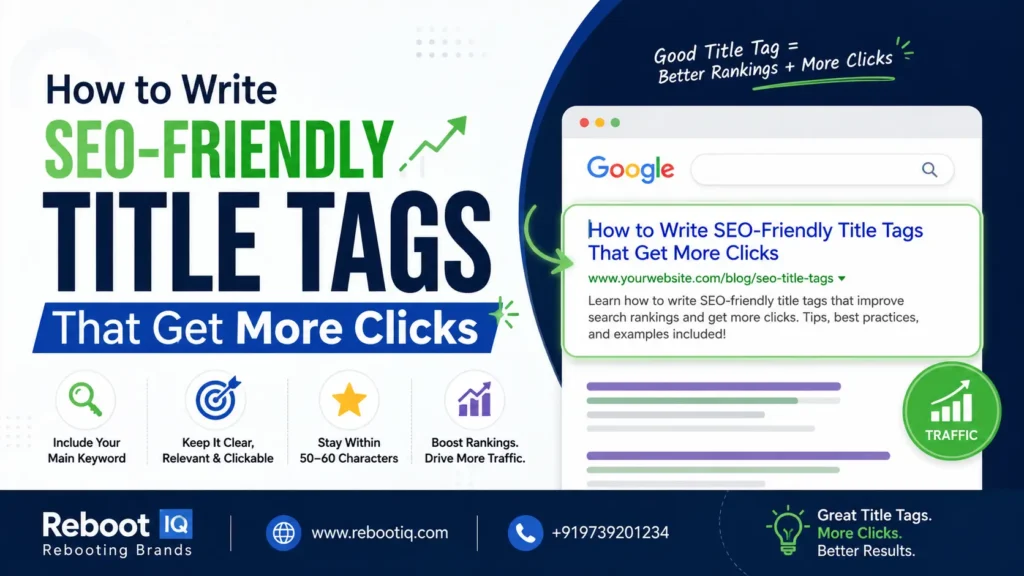
Your title tag is the first thing a searcher sees about your page — before your content, before your brand, before anything else. It shows up as the clickable blue link in search results, the tab title in a browser, and often the headline when your page gets shared. Get it right, and you earn the click. Get it wrong, and even a page ranking on page one can get scrolled past.
SEO title tags are one of the most important on-page elements you can optimize — and one of the most overlooked. They’re the short line of text search engines show as your clickable headline in results, and they can make the difference between a page that gets clicked and one that gets skipped entirely, even when it ranks well.
Think about the last time you searched for something on Google. You probably scanned five or six results in under ten seconds before clicking one. What made you pick that one over the others? Almost always, it’s the title.
This guide walks through exactly how to write SEO title tags that win clicks, rank well, and now, get picked up by AI answer engines too.
Here’s how to write title tags that both search engines and real people actually respond to.
What Is a Title Tag, Exactly?
A title tag is an HTML element that defines the title of a web page. It lives in the <head> section of your code like this:
<title>How to Write SEO-Friendly Title Tags That Get More Clicks</title>
It’s not the same as your on-page H1 headline, though the two can match. The title tag is what search engines pull into the search results page (SERP), and it’s what shows up as the label in browser tabs and bookmarks.
Why Title Tags Still Matter in 2026
With AI-generated overviews and answer engines pulling more information directly into search results, some marketers assume title tags matter less than they used to. The opposite is true. Title tags now do double duty:
- They influence click-through rate (CTR) in traditional search results.
- They help AI and answer engines understand what your page is about and whether to cite or summarize it — a practice often called Answer Engine Optimization (AEO).
A clear, well-structured title tag signals relevance to both a human scanning a results page and a language model deciding which sources to pull from. Vague or keyword-stuffed titles get skipped by both.
The Core Principles of a Great Title Tag
1. Lead With the Keyword, Not the Fluff
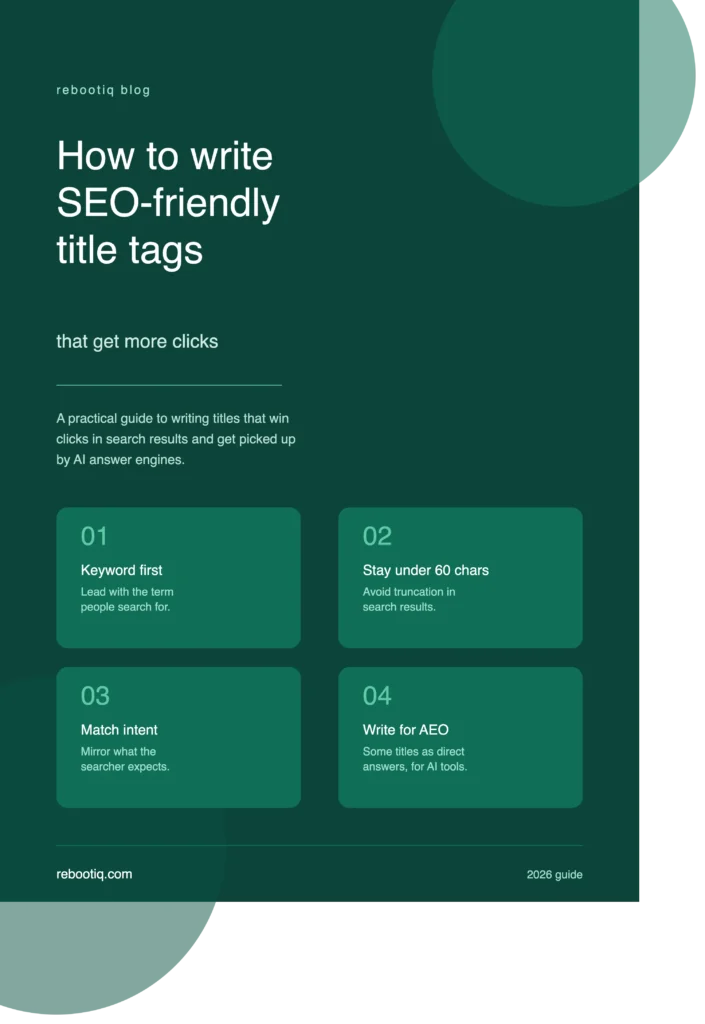
Search engines give extra weight to words that appear early in the title tag. If your target keyword is “SEO title tags,” don’t bury it after a branded intro or a vague phrase. Put the substance first, and save modifiers or brand names for the end.
Weak: Some Tips You Should Know About Improving Your Website’s Titles Strong: SEO Title Tags: 7 Rules for Higher Click-Through Rates
2. Match Search Intent
A title tag should tell the searcher exactly what they’ll get if they click. If someone is searching “how to write title tags,” a title like “The Ultimate Guide to Digital Marketing” won’t earn the click, even if the content is relevant. Mirror the intent behind the query: how-to, comparison, list, definition, or review.
3. Keep It Under ~60 Characters
Google typically displays 50-60 characters (roughly 580-600 pixels) before truncating a title with an ellipsis. Titles that get cut off mid-sentence look unfinished and can hurt your CTR. Use a SERP preview tool to check how your title renders before publishing, and always put your most important words in the first 60 characters just in case.
4. Write for Humans First, Algorithms Second
Keyword stuffing (“Title Tags | SEO Title Tags | Best Title Tags for SEO”) reads as spam to both users and search engines. Modern search algorithms are built to reward natural language that satisfies intent, not mechanical keyword repetition. Write one clear, compelling sentence — the keyword should fit naturally, not be forced in three times.
5. Use Power Words and Specificity
Numbers, brackets, and specific outcomes consistently outperform generic phrasing because they set a concrete expectation:
- “7 Ways to…” outperforms “Ways to…”
- “[2026 Guide]” outperforms no date reference at all
- “That Actually Work” outperforms no qualifier at all
Specificity builds trust. A reader is more likely to click a title that promises something measurable than one that’s abstract.
6. Avoid Duplicate Titles Across Your Site
Every page should have a unique title tag. Duplicate titles confuse search engines about which page to rank for a given query and dilute your site’s overall relevance signals. If you’re running a blog, audit your title tags periodically to catch accidental duplicates, especially on tag or category pages.
7. Optimize for AEO, Not Just SEO
Answer engines and AI overviews tend to favor titles that read like clear, direct answers to a question. Structuring at least some of your titles as direct questions or statements (“What Is a Title Tag?” or “How Long Should a Title Tag Be?”) increases the odds that an AI system will extract and cite your content when generating a summarized answer.
A Simple Title Tag Formula
For most blog and content pages, this structure works well:
[Primary Keyword] + [Specific Benefit or Number] + [Modifier] | [Brand, optional]
Example: SEO Title Tags: 7 Rules for More Clicks in 2026 | RebootIQ
Common Title Tag Mistakes to Avoid
- Too long: Titles over 60 characters get truncated and lose impact.
- Too vague: “Blog Post” or “Home” tells search engines and users nothing.
- Keyword stuffing: Repeating the same phrase multiple times looks spammy and can trigger algorithmic penalties.
- Clickbait without payoff: A title that overpromises and underdelivers increases bounce rate, which can hurt rankings over time.
- Ignoring branding: For established brands, appending your name at the end of the title can boost recognition and trust in the SERP.
Final Thoughts
A great title tag sits at the intersection of clarity, relevance, and curiosity. It tells search engines exactly what your page covers, tells readers exactly why they should click, and increasingly, tells AI systems whether your content deserves to be cited as an answer. Treat every title tag as a headline worth testing and refining — small changes here often produce some of the highest-leverage wins in SEO.
