How to Track Phone Call Conversions for Better Marketing ROI
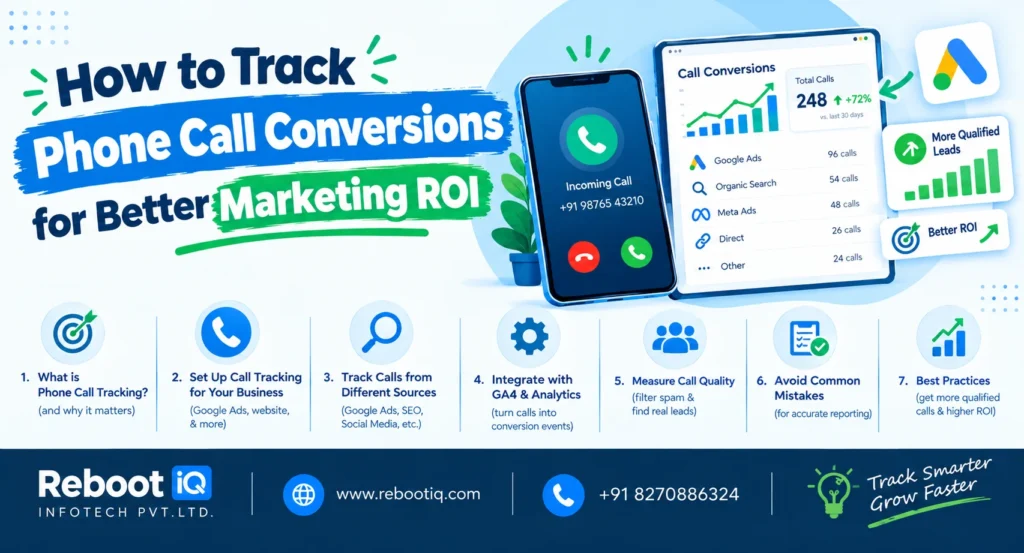
Phone calls remain one of the most valuable lead sources for many businesses. Industries such as healthcare, real estate, legal services, automotive, education, and home services often receive a large percentage of their inquiries through phone calls. However, many businesses focus only on website form submissions and overlook phone call conversions. This can result in incomplete marketing data and poor optimization decisions.
Phone Call Conversion Tracking helps businesses understand which marketing channels, campaigns, keywords, and advertisements generate valuable phone inquiries. By tracking calls accurately, marketers can measure true campaign performance and improve return on investment (ROI).
What Is Phone Call Conversion Tracking?
Phone Call Conversion Tracking is the process of measuring phone calls generated through digital marketing efforts. It allows businesses to identify where a call originated, whether from Google Ads, organic search, social media, email campaigns, or direct website visits.
Instead of simply counting the total number of calls received, businesses can analyze which marketing activities are producing qualified leads and actual customers.
Why Phone Call Tracking Matters
Many businesses invest heavily in digital marketing but only measure online actions such as form submissions and purchases. This creates an incomplete picture of performance because some potential customers prefer calling rather than filling out a form.
Phone call tracking helps businesses:
- Measure lead quality more accurately
- Identify high-performing marketing channels
- Improve advertising ROI
- Optimize keyword targeting
- Understand customer behavior
- Increase conversion rates
Without call tracking, businesses may underestimate the effectiveness of their marketing campaigns.
How Phone Call Conversion Tracking Works
Call tracking systems use unique phone numbers assigned to different marketing channels or campaigns. When a user calls that number, the system records important information such as:
- Traffic source
- Campaign name
- Keyword used
- Call duration
- Caller location
- Time of call
The data is then integrated into analytics and advertising platforms for reporting and optimization.
Tracking Calls from Google Ads
Google Ads offers built-in call conversion tracking features. Businesses can track:
- Calls made directly from call ads
- Calls made through call extensions
- Calls from website visitors after clicking an ad
Google assigns a forwarding number that allows advertisers to measure call performance and attribute conversions correctly.
This helps marketers identify which campaigns generate the most valuable phone leads.
Tracking Calls from Organic Search
SEO campaigns often drive significant phone inquiries. By implementing dynamic number insertion (DNI), businesses can display different phone numbers based on the visitor’s traffic source.
When a user arrives from Google organic search and makes a call, the system records the source and attributes the conversion to SEO efforts.
This provides a clearer understanding of the impact of organic traffic on business growth.
Integrating Call Tracking with GA4
Google Analytics 4 (GA4) allows businesses to track phone calls as conversion events.
Common phone-related events include:
- Click-to-call button clicks
- Mobile call interactions
- Tracked phone conversations
- Callback requests
By marking these events as conversions, businesses can analyze phone leads alongside other conversion actions.
Measuring Lead Quality
Not every phone call is valuable. Some callers may be existing customers, spam callers, or unrelated inquiries.
Many call tracking platforms allow businesses to define qualified calls based on criteria such as:
- Call duration exceeding 60 seconds
- Calls connected successfully
- Sales-related conversations
- Appointment bookings
This helps focus reporting on meaningful business outcomes rather than raw call volume.
Common Phone Tracking Mistakes
Businesses often make several mistakes when implementing call tracking:
- Tracking all calls as conversions
- Not filtering spam calls
- Ignoring call quality
- Failing to integrate tracking with analytics platforms
- Using a single phone number for all campaigns
These mistakes can lead to misleading reports and poor marketing decisions.
Best Practices for Phone Call Conversion Tracking
To maximize results:
- Use unique tracking numbers for major campaigns.
- Connect call tracking with GA4 and Google Ads.
- Define qualified call criteria.
- Monitor call recordings when permitted.
- Review reports regularly.
- Optimize campaigns based on call quality rather than call volume.
Following these practices ensures more accurate measurement and better campaign optimization.
Conclusion
Phone Call Conversion Tracking is essential for businesses that rely on phone inquiries to generate revenue. It provides deeper visibility into marketing performance and helps identify which campaigns produce real business results.
By combining phone tracking with platforms like Google Ads and GA4, businesses can make data-driven decisions, improve lead quality, and maximize marketing ROI. Accurate call tracking ensures that valuable phone leads are never overlooked and that every marketing dollar is measured effectively.
