Why Some Websites Get Recommended by AI While Others Don’t
Introduction
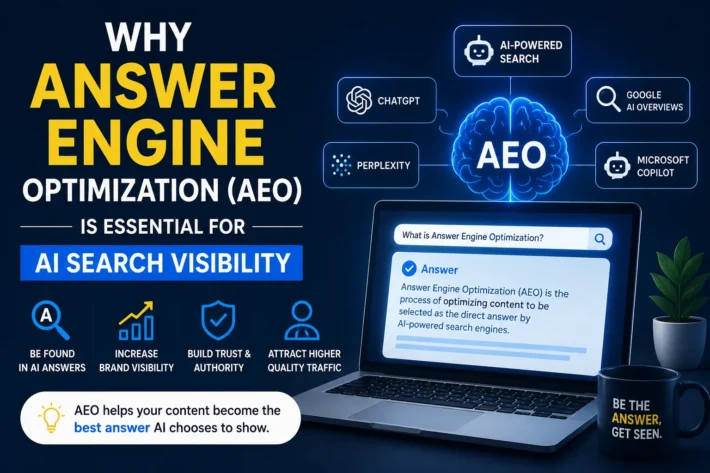
A few years ago, improving a website’s visibility meant focusing almost entirely on Google’s search results. Today, that approach is no longer enough. Millions of users now ask questions directly to AI-powered platforms instead of clicking through multiple web pages. These systems don’t simply list websites they generate answers by drawing from sources they consider reliable.
This raises an important question for every business owner: Why do some websites become part of AI-generated answers while others are ignored?
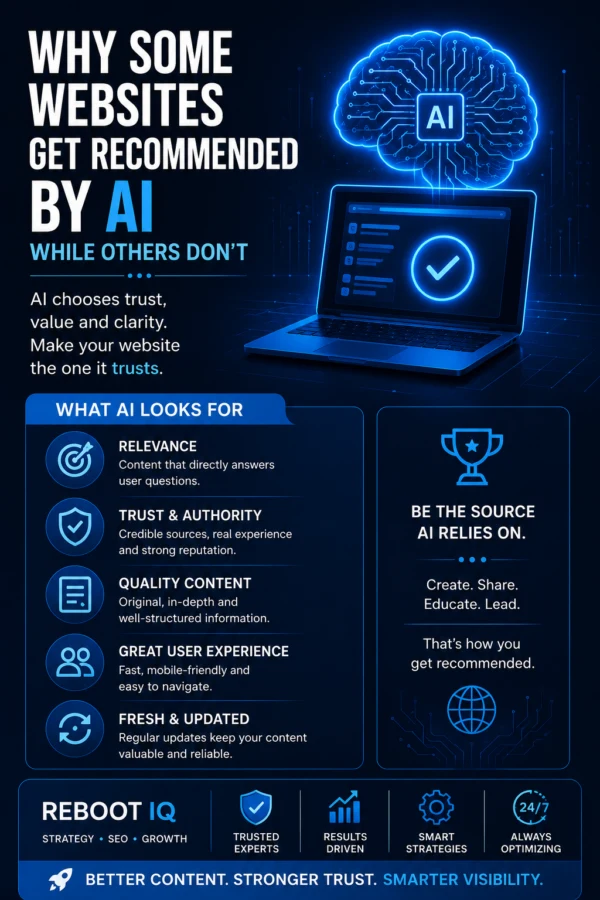
The answer has very little to do with tricks or shortcuts. AI rewards websites that consistently demonstrate credibility, clarity, and usefulness. If your content genuinely helps people solve problems, your chances of being referenced increase naturally.
AI Doesn’t Think Like a Traditional Search Engine
Conventional search engines organize pages based on ranking signals. AI systems work differently. Their objective is to provide the most useful response in the fewest words possible.
Instead of asking, Which page ranks first?, AI asks, Which information is accurate enough to include in my answer?
That difference changes how websites should create content.
Trust Is Earned Before Visibility
Imagine asking two people the same technical question. One gives a detailed explanation supported by experience, while the other repeats information copied from somewhere else. Most people would trust the first person.
AI follows a similar principle.
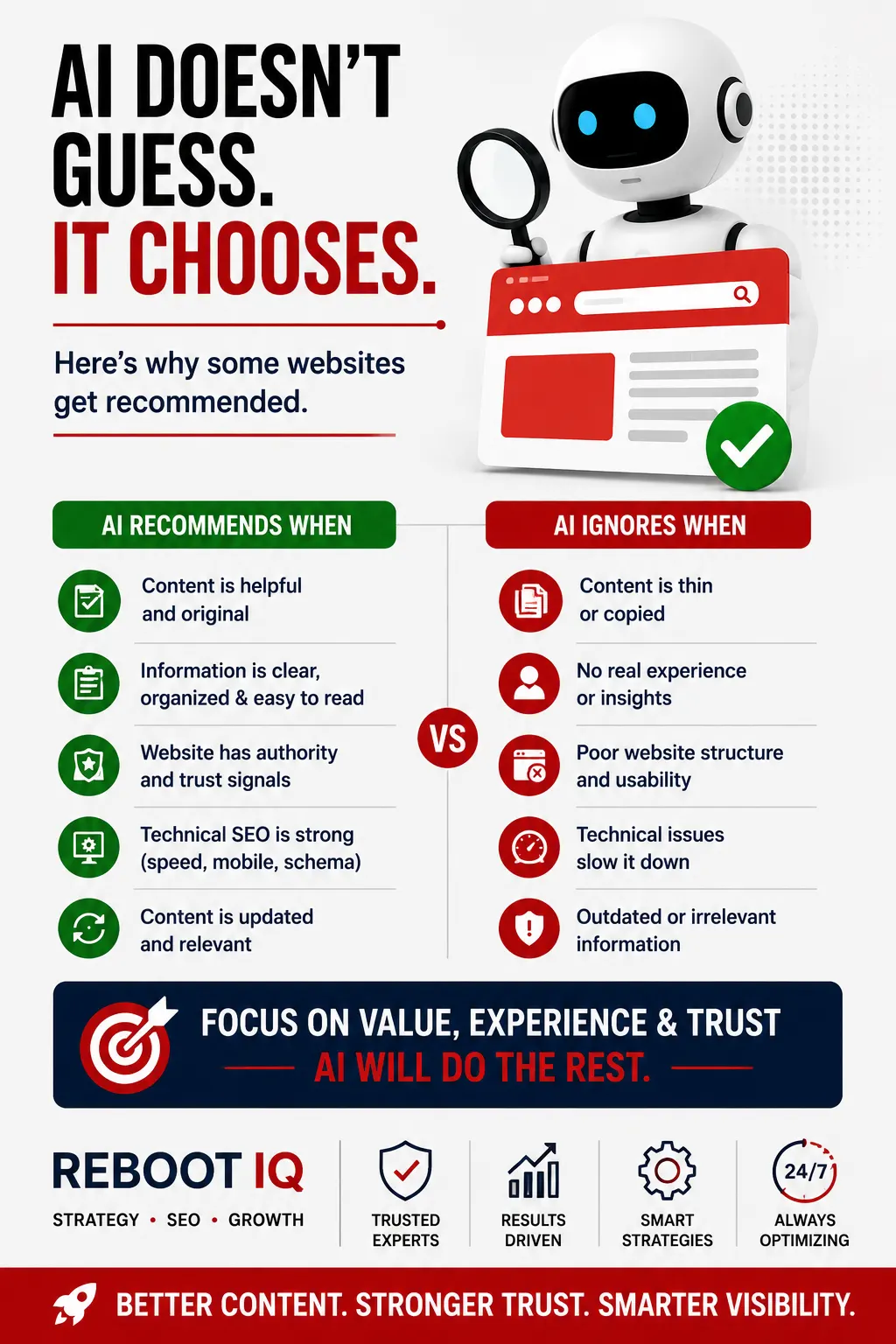
Websites that consistently publish accurate, well-researched, and transparent information gradually build digital trust. Over time, this trust becomes one of the strongest reasons AI chooses one source over another.
Original Ideas Carry More Weight
Many websites publish articles covering identical topics with nearly identical wording. Although these pages may contain correct information, they rarely add anything new.
AI increasingly favors content that contributes something unique, such as:
- Practical observations
- First-hand experience
- Industry insights
- Original research
- Step-by-step solutions based on real work
When every article says the same thing, the website that introduces fresh perspectives naturally stands out.
Clear Communication Helps AI Understand Content
Complex language does not make content better.
The strongest articles explain difficult topics in a simple, organized way. Short paragraphs, meaningful headings, and logical flow allow both readers and AI systems to understand the content quickly.
If readers can easily follow your article, AI usually can too.
Authority Is Built Through Consistency
One excellent article will not suddenly make a website an authority.
Authority develops when a business consistently publishes valuable content around the same subject. Each useful article strengthens the website’s expertise and helps search systems understand what the business specializes in.
Consistency often produces better long-term results than publishing dozens of unrelated articles.
Technical Quality Still Matters
Even exceptional content needs a strong technical foundation.
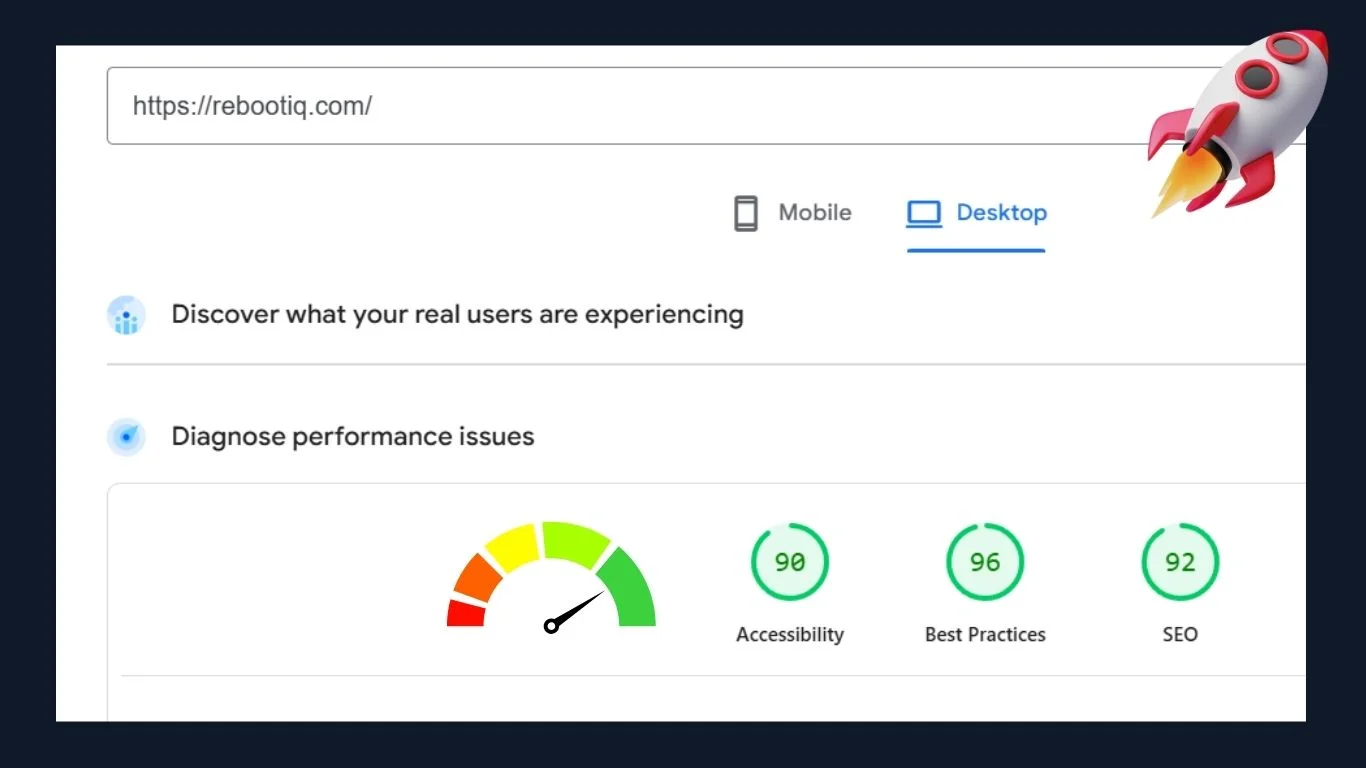
Slow-loading pages, broken links, poor mobile usability, and confusing navigation reduce the overall quality of a website.
AI systems are more likely to trust websites that provide a smooth user experience alongside valuable information.
Solving Problems Is More Important Than Ranking
Many businesses still begin content creation by asking, “Which keyword has the highest search volume?”
A better question is, “What problem is my audience trying to solve?”
Content created with this mindset naturally becomes more useful. Instead of chasing rankings, it focuses on delivering clear answers and practical guidance—the very qualities AI is designed to reward
Credibility Extends Beyond the Article
People judge a website by more than its content.
Clear contact information, author details, privacy policies, customer testimonials, and a professional design all contribute to credibility.
These trust signals help both visitors and AI systems recognize that the website represents a legitimate business rather than an anonymous content publisher.
Preparing for the Future of Search
Artificial intelligence will continue changing how information is discovered online. Businesses that rely only on traditional SEO may miss opportunities as AI-powered search becomes more common.
The most successful websites will combine technical optimization with authentic expertise, creating resources that genuinely help readers instead of simply targeting search rankings.
Conclusion
The websites that AI recommends are rarely chosen by accident. They earn visibility by consistently publishing reliable, original, and user-focused content.
Rather than searching for shortcuts, businesses should focus on creating articles that answer real questions, demonstrate genuine expertise, and provide lasting value. Over time, these qualities build the trust that both users and AI systems are looking for.
FAQs
Q1. Why doesn’t AI recommend every website?
Because AI prioritizes sources that consistently demonstrate accuracy, authority, and usefulness.
Q2. Does keyword stuffing improve AI visibility?
No. AI understands context and rewards content written for people rather than search engines.
Q3. Can a new website appear in AI search?
Yes. If it publishes original, trustworthy, and well-structured content, a new website can gradually earn visibility.
Q4. Is SEO still necessary?
Absolutely. Strong SEO provides the technical and content foundation that also supports AI search visibility.
Q5. What is the biggest factor influencing AI recommendations?
Content that genuinely answers user questions while demonstrating expertise and trustworthiness has the best chance of being recommended.