
Why Your Website Isn’t Ranking on Google (And How to Fix It): 15 Proven SEO Strategies
Launching a website is an exciting milestone, but many businesses become frustrated when their pages don’t appear on Google—even after weeks or months of publishing content.
The truth is that ranking on Google isn’t about luck. Search engines evaluate hundreds of signals before deciding which pages deserve the top positions. If your website isn’t ranking, there’s usually a clear reason behind it.
The good news? Most ranking issues can be fixed with the right SEO approach.
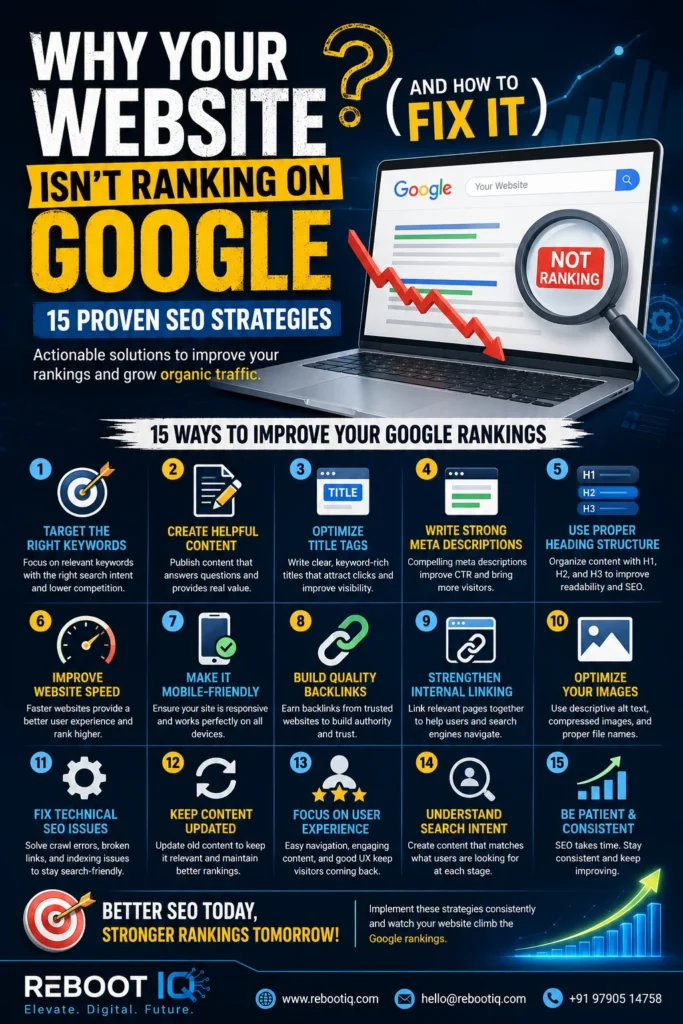
Here are 15 proven strategies to improve your website’s visibility and build long term organic growth.
Target the Right Keywords
Many websites try to rank for highly competitive keywords from day one. Instead, focus on keywords that match your audience’s search intent and have realistic competition. Long-tail keywords often deliver better results because they attract visitors looking for specific solutions.
Create Helpful Content
Google rewards content that answers users’ questions clearly and completely. Avoid publishing articles just to increase your page count. Every blog should educate, solve a problem, or provide practical value.
Improve Your Page Titles
Your title tag is one of the first things both Google and users see. Keep it descriptive, include your primary keyword naturally, and make it compelling enough to encourage clicks.
Write Strong Meta Descriptions
Although meta descriptions aren’t a direct ranking factor, they influence click-through rates. A well-written description tells users what they’ll gain by visiting your page and can improve overall search performance.
Optimize Heading Structure
Use one H1 heading for your main title and organize the rest of your content with H2 and H3 headings. A clear structure improves readability for both visitors and search engines.
Speed Up Your Website
Slow-loading pages create a poor user experience. Compress images, remove unnecessary scripts, enable browser caching, and choose reliable hosting to improve loading speed. Faster websites often perform better in search results.
Make Your Website Mobile-Friendly
Most Google searches now happen on mobile devices. Your website should display correctly on every screen size, with readable text, responsive layouts, and easy navigation.
Build Quality Backlinks
Backlinks remain an important SEO signal. Instead of chasing hundreds of links, focus on earning mentions from trusted and relevant websites through valuable content, guest posts, and digital PR.
Strengthen Internal Linking
Internal links help visitors discover related content while making it easier for search engines to understand your website’s structure. Link naturally to relevant service pages and blog posts wherever appropriate.
Optimize Images
Large image files can slow down your website. Compress images before uploading, use descriptive file names, and write meaningful alt text to improve accessibility and image search visibility.
Fix Technical SEO Issues
Broken links, duplicate pages, crawl errors, and missing XML sitemaps can prevent Google from indexing your content properly. Regular technical audits help identify and resolve these problems before they affect your rankings.
Keep Your Content Updated
SEO is an ongoing process. Review your existing content regularly, refresh outdated information, add new insights, and improve sections that no longer meet user expectations. Fresh content often performs better over time.
Focus on User Experience
Visitors should be able to find information quickly without distractions. Clear navigation, readable fonts, logical page layouts, and simple calls to action encourage users to stay longer and explore more pages.
Understand Search Intent
Before creating content, ask yourself what users actually want when they search for a keyword. Some people want information, while others are ready to buy or compare options. Matching your content to search intent increases its chances of ranking.
Be Patient and Consistent
SEO rarely delivers overnight results. Building authority takes time, especially for new websites. Publishing high-quality content consistently, improving your website, and monitoring performance will produce better results than looking for quick fixes.
Final Thoughts
If your website isn’t ranking on Google, don’t assume your efforts have failed. In many cases, small improvements across multiple areas can lead to significant gains over time.
Successful SEO isn’t about finding a secret trick it’s about building a website that deserves to rank. By targeting the right keywords, creating valuable content, improving technical performance, and delivering an excellent user experience, you’ll create a stronger foundation for sustainable organic growth.
Remember, SEO is a long-term investment. Stay consistent, measure your results, adapt to changes, and continue improving your website. The businesses that focus on quality instead of shortcuts are the ones that achieve lasting success in search.
Frequently Asked Questions
Why is my website not ranking on Google?
Common reasons include poor keyword targeting, low-quality content, slow website speed, technical SEO issues, lack of backlinks, or a website that is too new to have built authority.
How long does SEO take to show results?
Most websites begin to see noticeable improvements within three to six months, although the timeline depends on competition, website quality, and the consistency of SEO efforts.
Do backlinks still matter for SEO?
Yes. High-quality backlinks from trusted and relevant websites remain an important signal that helps Google evaluate the authority and credibility of your website.
Can I rank on Google without paid advertising?
Absolutely. Organic SEO focuses on earning rankings through valuable content, technical optimization, and authority rather than paying for advertisements.
