
How to Split Audience Categories for a Business in Meta Ads
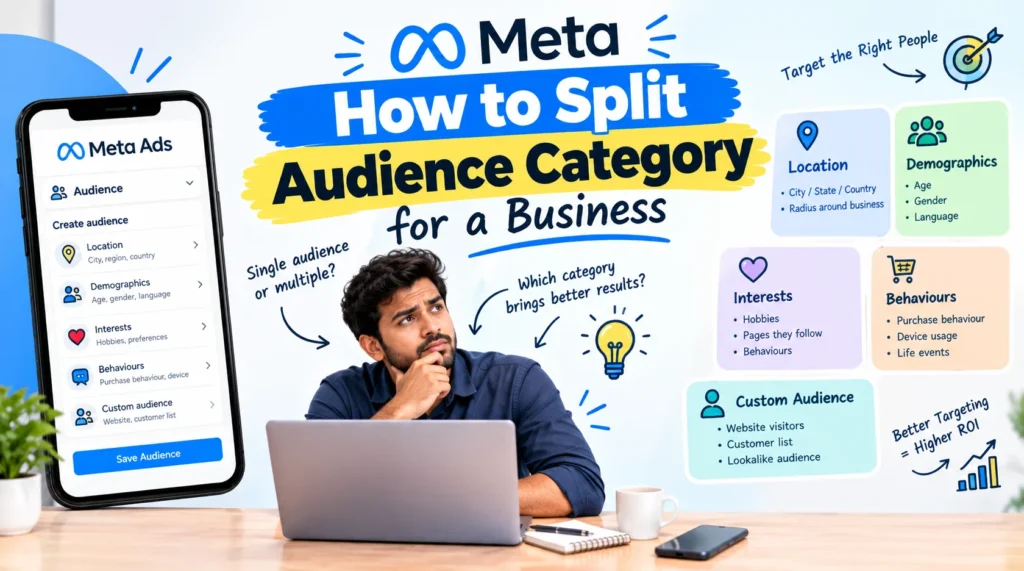
One of the biggest mistakes advertisers make is targeting everyone with a single ad set. Different customers have different needs, interests, and buying intentions. That’s why audience segmentation is crucial. Properly splitting your audience categories helps Meta’s algorithm understand who is most likely to engage, convert, and become a customer.
In this guide, you’ll learn how to split audience categories for a business and see a practical example for a salon business.
Why Audience Segmentation Matters
Audience segmentation is the process of dividing potential customers into groups based on common characteristics. Instead of showing the same advertisement to everyone, businesses can create personalized messages for each audience category.
Benefits include:
- Higher Click-Through Rate (CTR)
- Better Lead Quality
- Lower Cost Per Lead (CPL)
- Improved Conversion Rate
- Better Return on Ad Spend (ROAS)
For example, a bridal makeup offer may appeal to brides-to-be but not necessarily to someone looking for a monthly haircut package.
How to Split Audience Categories
When creating Meta Ads campaigns, businesses can divide audiences into the following categories:
1. Demographic Audience
This includes:
- Age
- Gender
- Relationship Status
- Income Level
- Occupation
Example:
A premium salon may focus on working professionals aged 25-45 who have higher spending power.
2. Interest-Based Audience
Meta allows advertisers to target users based on interests.
Examples:
- Beauty
- Hair Care
- Makeup
- Fashion
- Luxury Lifestyle
- Cosmetics
These audiences are useful when trying to reach people who are already interested in your services.
3. Behavioral Audience
Behavioral targeting focuses on user actions.
Examples:
- Online shoppers
- Frequent travelers
- Engaged shoppers
- Mobile device users
These users are generally more likely to take action after seeing an advertisement.
4. Custom Audience
Custom audiences include people who already know your business.
Examples:
- Website visitors
- Instagram followers
- Facebook page visitors
- WhatsApp leads
- Existing customers
These audiences usually generate the highest conversion rates because they already have brand awareness.
5. Lookalike Audience
Meta can create audiences similar to your existing customers.
You can build lookalikes from:
- Customer lists
- Website visitors
- Lead forms
- Previous purchasers
Lookalike audiences help businesses scale while maintaining lead quality.
Salon Business Audience Segmentation Example
Let’s assume a salon in Bangalore wants to generate leads for multiple services.
| Audience Category | Target Audience | Offer |
|---|---|---|
| Women’s Hair Services | Women 18-45 interested in Hair Care, Hair Styling | Hair Spa & Haircut Offers |
| Bridal Makeup | Women 21-35 engaged or interested in wedding planning | Bridal Makeup Package |
| Men’s Grooming | Men 20-45 interested in grooming and fashion | Haircut & Beard Styling |
| Premium Customers | High-income professionals within 5 km radius | Luxury Salon Membership |
| Existing Customers | Previous customers and WhatsApp leads | Loyalty Discounts |
| Instagram Engagers | People who interacted with Instagram page | Seasonal Offers |
| Lookalike Audience | Similar to existing customers | General Lead Generation |
| Nearby Residents | People within 3-7 km radius | First Visit Discount |
Recommended Campaign Structure
Instead of placing all audiences in one ad set, create separate ad sets.
Example:
Campaign: Salon Lead Generation
- Ad Set 1: Women’s Hair Services
- Ad Set 2: Bridal Makeup
- Ad Set 3: Men’s Grooming
- Ad Set 4: Existing Customers
- Ad Set 5: Lookalike Audience
This structure allows Meta to identify which audience generates the best results and helps advertisers allocate budgets more effectively.
Common Mistakes to Avoid
Many businesses make these audience targeting mistakes:
- Combining multiple audience types into one ad set
- Using very narrow targeting
- Ignoring retargeting audiences
- Running the same creative for every audience
- Not excluding existing customers from prospecting campaigns
Different audiences require different messaging and creatives.
Conclusion
Audience segmentation is one of the most effective ways to improve Meta Ads performance. By splitting audiences based on demographics, interests, behavior, custom audiences, and lookalike audiences, businesses can deliver more relevant ads and generate better results.
For a salon business, separating audiences such as women’s hair services, bridal makeup, men’s grooming, existing customers, and lookalike audiences can significantly improve lead quality while reducing advertising costs. A well-structured audience strategy helps businesses maximize every rupee spent on Meta Ads while achieving consistent growth.
