
What’s Happening in My Meta Ad? 7 Reasons Your Campaign Performance Is Changing
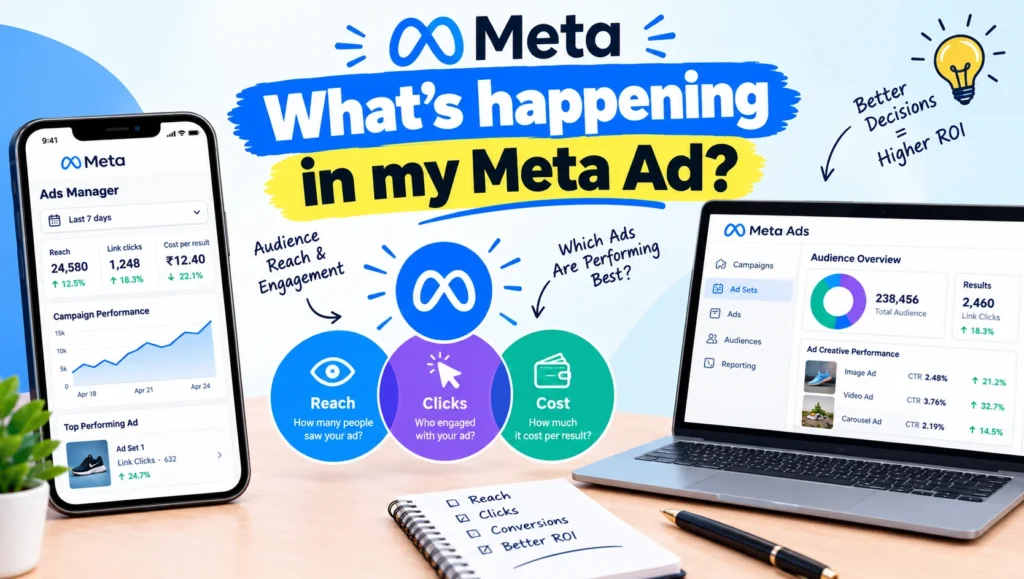
Have you ever launched a Meta ad campaign that performed well initially but suddenly started generating fewer leads, increasing costs, or attracting irrelevant audiences? You’re not alone. Many businesses experience unexpected changes in Facebook and Instagram ad performance.
Understanding what’s happening in your Meta ad is essential for identifying problems and improving campaign results. Instead of immediately increasing your budget or creating a new campaign, you need to analyze the data and understand what is causing the change.
Let’s explore seven common reasons behind fluctuating Meta ad performance and how to address them.
1. Your Ad Is Experiencing Creative Fatigue
Creative fatigue happens when your audience sees the same advertisement repeatedly and becomes less interested in engaging with it.
You may notice declining click-through rates (CTR), fewer leads, or increasing cost per lead (CPL). Your ad frequency may also increase over time.
How to fix it: Refresh your ad creatives regularly. Test different headlines, images, videos, and offers. You don’t necessarily need to create an entirely new campaign; testing fresh creatives within your existing strategy may help restore engagement.
2. Meta Is Reaching the Wrong Audience
Your campaign might generate plenty of leads, but many prospects may not be interested in your product or service. This can happen because of broad targeting, unclear messaging, or an offer that attracts people outside your ideal customer profile.
For example, a franchise advertisement targeting people who cannot meet the minimum investment requirement may generate leads but very few qualified prospects.
How to fix it: Review your lead quality, audience settings, location targeting, and ad messaging. Mention important eligibility requirements, pricing, or minimum investment where appropriate. Optimize your campaign around meaningful business outcomes rather than lead volume alone.
3. Your Cost Per Lead Is Increasing
An increasing cost per lead doesn’t automatically mean your campaign is failing. Advertising costs can fluctuate because of competition, audience behavior, creative performance, and changes in conversion rates.
If your CPL increases while lead quality remains strong, the campaign may still be profitable. However, rising costs combined with declining lead quality require immediate investigation.
How to fix it: Compare your CPM, CTR, CPC, landing page views, conversion rate, and CPL against previous periods. Identify which metric changed first before making adjustments.
4. Your Campaign Is Stuck in the Learning Phase
Meta’s delivery system needs sufficient optimization events to learn which audiences are more likely to complete your desired action. Significant edits to budgets, targeting, optimization settings, or ad creatives can affect delivery and may cause an ad set to re-enter the learning phase.
Frequent changes can make it harder to evaluate performance consistently.
How to fix it: Avoid unnecessary edits and give your campaign enough time and data to demonstrate a meaningful trend. Make changes based on performance evidence rather than reacting to every daily fluctuation.
5. Your Ads Are Generating Clicks but Not Conversions
Sometimes your advertisement attracts attention, but users don’t complete the desired action. The problem may be your landing page, slow loading speed, confusing form, weak offer, or lack of trust.
How to fix it: Test your landing page on mobile devices, check form functionality, simplify the conversion process, and ensure that your landing page matches the promise made in your ad. Review the conversion journey to identify where potential customers drop off.
6. Your Leads Are Not Responding
Generating a lead is only the first step. Delayed follow-ups, unanswered calls, and unclear sales communication can prevent interested prospects from becoming customers.
How to fix it: Contact leads as quickly as possible, use consistent follow-up sequences, and track lead status in your CRM. Compare contact rates and qualified lead rates across campaigns before blaming Meta for poor results.
7. You Are Making Too Many Changes at Once
Changing budgets, creatives, audiences, placements, and campaign objectives simultaneously makes it difficult to understand what improved or damaged performance.
How to fix it: Change one major variable at a time whenever practical. Record your changes, compare results over appropriate time periods, and evaluate performance using sufficient data.
Final Thoughts
If you’re wondering, “What’s happening in my Meta ad?”, don’t panic when results fluctuate. The real issue could be creative fatigue, audience quality, conversion problems, increasing competition, or an ineffective sales follow-up process.
Start by checking your campaign metrics, identifying where performance dropped, and investigating the underlying cause. Make informed adjustments instead of repeatedly resetting your campaigns.
Remember, successful Meta advertising isn’t just about generating more clicks or leads. It’s about attracting the right audience, converting prospects efficiently, and achieving profitable business results.
