10 Best SEO Tools That Can Transform Your Website’s Performance
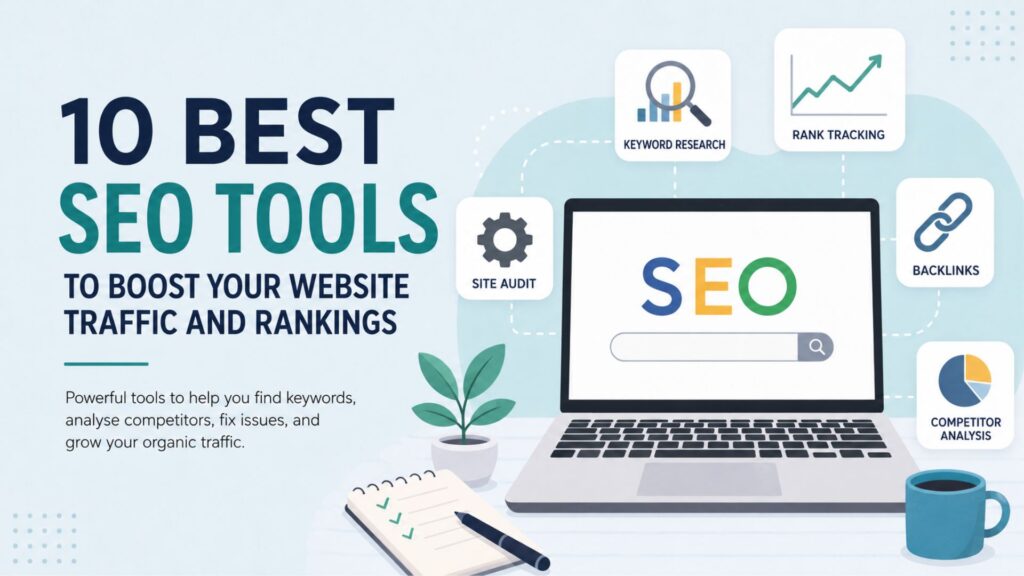
If your website is not showing up where your customers are searching, you are leaving traffic, leads, and revenue on the table.
SEO is not about guessing what Google wants. It is about understanding what your audience searches for, fixing what holds your website back, and creating content that genuinely helps people. The right tools make this process easier, faster, and far more measurable.
From finding high-intent keywords to tracking rankings, auditing technical issues, and analysing competitors, the best SEO tools give businesses the clarity they need to grow organically.
Here are 10 tools that can help transform your website’s performance and make your SEO strategy more effective.
1. Google Search Console
Google Search Console is one of the most important free tools for any website owner. It helps you understand how your website performs on Google Search and highlights areas that need attention.
You can track which keywords bring users to your website, monitor clicks and impressions, identify pages with low click-through rates, and find indexing issues that may stop your pages from appearing in search results.
It also helps you submit sitemaps, check mobile usability, and spot technical errors. If you are serious about improving organic visibility, this should be one of the first tools in your SEO setup.
2. Google Analytics 4
Traffic alone does not tell the full story. You need to know what visitors do after they land on your website.
Google Analytics 4 helps you track user behaviour, page engagement, conversions, traffic sources, and customer journeys. It gives you a clearer picture of which pages are performing well and which pages are failing to convert visitors into leads or customers.
When used alongside Google Search Console, it becomes easier to connect SEO performance with real business results. You can see whether your organic traffic is bringing the right audience and whether that traffic is taking meaningful action.
3. Semrush
Semrush is one of the best SEO tools for businesses that want an all-in-one platform. It offers keyword research, competitor analysis, backlink tracking, site audits, rank tracking, and content optimisation features.
One of its strongest features is competitor research. You can see which keywords your competitors rank for, where they get backlinks from, and which pages drive the most traffic to their websites.
This gives you useful direction instead of relying on assumptions. You can identify content gaps, discover keyword opportunities, and build a more focused SEO strategy around what is already working in your industry.
4. Ahrefs
Ahrefs is widely known for its powerful backlink database and keyword research capabilities. It is especially useful for businesses looking to strengthen their website authority and understand their competitors’ link-building strategies.
With Ahrefs, you can analyse your backlink profile, find broken links, research content ideas, and track keyword rankings. Its Site Explorer tool helps you see which pages on a competitor’s website attract the most backlinks and organic traffic.
Backlinks are still an important part of SEO, but quality matters more than quantity. Ahrefs can help you identify relevant websites, content opportunities, and link-building gaps that can improve your search visibility over time.
5. Screaming Frog SEO Spider
Technical SEO can often feel complicated, especially when your website has many pages. Screaming Frog makes it easier by crawling your website and identifying issues that may affect search performance.
It can find broken links, duplicate content, missing title tags, missing meta descriptions, redirect issues, large image files, and pages that are blocked from search engines.
This tool is particularly useful during a website audit. A clean, well-structured website helps search engines crawl and understand your pages better. It also improves user experience, which can support stronger engagement and better performance.
6. Rank Math
For websites built on WordPress, Rank Math is a practical SEO plugin that helps optimise pages and blog posts directly inside the website dashboard.
It allows you to set focus keywords, optimise meta titles and descriptions, add schema markup, create XML sitemaps, and check on-page SEO recommendations while writing content.
Rank Math is useful because it makes SEO more manageable for website owners and content teams. Instead of publishing content and hoping it performs, you can check key optimisation elements before the page goes live.
However, remember that SEO scores are only a guide. The goal is not to force keywords into every sentence. The goal is to create useful, clear, and relevant content that answers the user’s search intent.
7. Yoast SEO
Yoast SEO is another popular WordPress plugin that helps with on-page optimisation. It provides readability checks, keyword placement suggestions, metadata support, and technical SEO settings.
For beginners, Yoast can make SEO basics easier to understand. It encourages you to use headings properly, write readable paragraphs, optimise page titles, and include relevant internal links.
While Rank Math and Yoast SEO offer similar features, the right choice depends on your website requirements and workflow. What matters most is using the plugin consistently and combining it with a strong content strategy.
8. Ubersuggest
Ubersuggest is a useful option for small businesses, startups, and marketers who want simple keyword research and website audit features without starting with a complex platform.
It helps you discover keyword ideas, search volume, SEO difficulty, competitor pages, backlink data, and content opportunities. It is especially helpful when planning blogs around topics your audience is actively searching for.
The best SEO tools do not just provide data. They help you turn data into action. Ubersuggest makes this easier by presenting keyword and competitor insights in a more beginner-friendly format.
9. Surfer SEO
Surfer SEO focuses on content optimisation. It analyses top-ranking pages for a target keyword and gives recommendations around word count, headings, related terms, and content structure.
This can be useful when creating blog content that needs to compete in a crowded search result page. It helps you understand what topics and subtopics are commonly covered by high-ranking pages.
But content should never be written only to satisfy a tool score. Your blog should still sound natural, answer real questions, and offer value beyond what users can find elsewhere. Use Surfer SEO as a guide, not as a replacement for good thinking and good writing.
10. PageSpeed Insights
Website speed plays a major role in user experience. A slow website can increase bounce rates, reduce engagement, and make visitors leave before they explore your services or products.
Google PageSpeed Insights helps you check how quickly your website loads on mobile and desktop devices. It also gives recommendations to improve performance, such as compressing images, reducing unused code, improving server response time, and optimising scripts.
A fast, mobile-friendly website is not just good for SEO. It is also better for users, leads, and conversions. This is why PageSpeed Insights deserves a place among the best SEO tools for website performance.
How to Choose the Right SEO Tools for Your Business
Not every business needs every tool from day one. The right SEO stack depends on your goals, website size, budget, and level of competition.
If you are just starting, Google Search Console, Google Analytics 4, Rank Math, and PageSpeed Insights can give you a strong foundation. As your website grows, tools like Semrush, Ahrefs, Screaming Frog, and Surfer SEO can help you go deeper into keyword research, technical audits, content planning, and competitor analysis.
The key is not to collect tools. The key is to use them consistently and make decisions based on the insights they provide.
Final Thoughts
SEO is a long-term growth channel, not a one-time task. Your rankings can improve when your website is technically strong, your content is useful, and your strategy is built around what your audience is searching for.
The best SEO tools help you identify problems, uncover opportunities, and measure progress. But tools alone cannot create results. They need the right strategy, consistent optimisation, and content that speaks directly to your audience.
At Reboot IQ, we combine data-driven SEO strategies with content, technical optimisation, and performance tracking to help businesses improve visibility, attract the right traffic, and turn website visits into real growth.
FAQs
What are the best SEO tools for beginners?
Google Search Console, Google Analytics 4, Rank Math, Ubersuggest, and PageSpeed Insights are great tools for beginners. They help you understand website traffic, keyword performance, on-page SEO, and technical issues without making the process too complicated.
Are free SEO tools enough for a small business?
Free tools can be enough when you are starting out. Google Search Console, Google Analytics 4, and PageSpeed Insights provide valuable insights. As your website and competition grow, paid tools can offer deeper keyword, backlink, and competitor research.
Which SEO tool is best for keyword research?
Semrush, Ahrefs, Ubersuggest, and Google Keyword Planner are useful for keyword research. The right tool depends on your budget and the level of detail you need.
Can SEO tools improve my Google rankings?
SEO tools do not improve rankings on their own. They help you identify issues, research keywords, optimise content, and track performance. Rankings improve when you use those insights to create a better website and a stronger SEO strategy.
How often should I use SEO tools?
It is a good idea to review your website performance every month. Technical audits can be done quarterly, while keyword tracking, content updates, and ranking checks should be monitored regularly.
