Google Ads Terms of Service Update 2026: 7 Critical Changes Every Advertiser Must Know
If you run Google Ads campaigns, manage client advertising accounts, or rely on paid search for lead generation, this update isn’t something you can afford to ignore.
Many advertisers automatically accept updated terms without reviewing them. However, the latest Google Ads Terms of Service Update includes new language around AI, data usage, liability, account management, and advertiser responsibilities.
In this guide, we’ll break down what changed, why Google updated its terms, and what businesses should do next.
What Is the Google Ads Terms of Service Update?
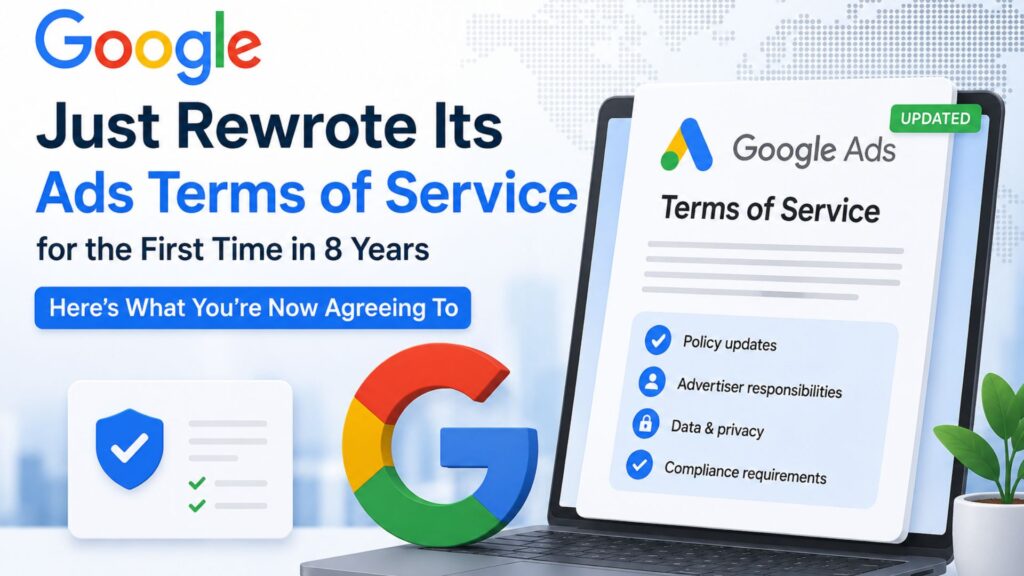
The Google Ads Terms of Service Update refers to Google’s latest revision of the legal agreement governing advertisers who use the Google Ads platform.
The update modernizes language that had remained largely unchanged for nearly eight years. It reflects the growing role of artificial intelligence, automation, privacy regulations, and changing digital advertising practices.
Google’s advertising ecosystem has evolved dramatically since the previous version of the agreement. Today’s advertisers rely heavily on automated bidding, AI-generated assets, audience signals, Performance Max campaigns, and machine learning optimization.
The updated terms bring legal documentation in line with these realities.
For reference, advertisers can review Google’s official advertising policies and documentation through the official Google Ads Help Center.
External Resource: Google Ads Help Center (DoFollow)
Why Google Updated Its Advertising Terms
Several factors likely contributed to the Google Ads Terms of Service Update.
Rapid Growth of AI in Advertising
Google increasingly uses artificial intelligence to generate headlines, descriptions, creative assets, audience recommendations, and campaign optimizations.
As AI becomes more integrated into advertising workflows, Google needs updated legal frameworks covering generated content and automated decisions.
Privacy and Data Regulations
Global regulations continue evolving, including GDPR, data protection requirements, and consent management standards.
The updated terms help Google align with modern privacy expectations and compliance requirements.
Expanding Advertising Ecosystem
Google Ads now includes:
- Search Campaigns
- Display Campaigns
- Video Campaigns
- Shopping Campaigns
- Performance Max
- Demand Gen Campaigns
- AI-powered creative tools
The new agreement reflects this broader ecosystem.
7 Major Changes in the Google Ads Terms of Service Update
1. Increased Emphasis on AI-Powered Advertising
One of the biggest highlights of the Google Ads Terms of Service Update is the growing role of AI-driven functionality.
Advertisers now interact with systems that automatically:
- Generate ad copy
- Recommend audiences
- Optimize bids
- Create assets
- Improve campaign performance
Businesses should understand that automation plays a much larger role than ever before.
2. Clarified Responsibility for Advertiser Content
Google continues to make it clear that advertisers remain responsible for their content.
Even if AI-generated suggestions are used, businesses are expected to ensure:
- Accuracy
- Compliance
- Truthfulness
- Legal validity
Accepting recommendations without review can create compliance risks.
3. Updated Data Usage Language
The Google Ads Terms of Service Update contains revised wording around data processing and advertising information.
This change reflects increasing regulatory scrutiny worldwide.
Advertisers should regularly review:
- Consent management practices
- Privacy policies
- Tracking implementations
- Customer data collection methods
4. Enhanced Platform Rights
Google has expanded and clarified certain rights related to platform management.
This includes the ability to:
- Remove non-compliant ads
- Suspend accounts
- Restrict advertising activities
- Enforce policy requirements
Businesses should remain proactive about compliance to avoid disruptions.
5. Modernized Legal Language
A significant portion of the update focuses on simplifying and modernizing legal terminology.
This helps advertisers better understand obligations while ensuring consistency across Google’s growing range of advertising products.
6. Updated Liability and Risk Allocation
The Google Ads Terms of Service Update provides more clarity around liabilities and responsibilities.
Advertisers should pay close attention to sections covering:
- Service interruptions
- Ad performance
- Platform availability
- Compliance obligations
Understanding these terms helps businesses evaluate advertising risks more effectively.
7. Stronger Alignment with Automation
Google’s future clearly points toward increased automation.
The revised terms acknowledge a world where:
- Bidding is automated
- Audience targeting is automated
- Creative optimization is automated
- Campaign management is increasingly automated
This shift reinforces the importance of strategic oversight rather than manual campaign adjustments.
How These Changes Impact Businesses
The Google Ads Terms of Service Update affects businesses of all sizes.
Small Businesses
Small businesses often rely heavily on automated campaign management.
The new terms make it even more important to:
- Review AI-generated assets
- Monitor campaign performance
- Ensure policy compliance
Mid-Sized Companies
Growing businesses managing multiple campaigns should strengthen internal governance around advertising compliance.
Enterprise Advertisers
Large organizations should involve legal, compliance, and marketing teams in reviewing updated agreements to ensure alignment with internal policies.
What Agencies Need to Know
Marketing agencies managing client accounts should carefully review the Google Ads Terms of Service Update.
Key considerations include:
Client Communication
Inform clients about policy changes and explain how the update may impact campaign management.
Compliance Reviews
Conduct audits of:
- Ad creatives
- Landing pages
- Tracking systems
- Data collection processes
Documentation
Maintain clear records regarding:
- Account ownership
- Campaign approvals
- Creative approvals
- Compliance procedures
Agencies that proactively adapt will be better positioned to protect both themselves and their clients.
Best Practices After the Google Ads Terms of Service Update
To stay compliant and competitive, advertisers should follow these best practices.
Review Terms Thoroughly
Don’t simply click “Accept.”
Understand what your organization is agreeing to.
Audit Existing Campaigns
Review:
- Ad copy
- Extensions
- Landing pages
- Audience targeting
Monitor AI Recommendations
AI can improve efficiency, but human oversight remains critical.
Strengthen Privacy Compliance
Ensure your business complies with applicable privacy regulations and consent requirements.
Train Marketing Teams
Everyone involved in advertising should understand the implications of the Google Ads Terms of Service Update.
Future Implications for Digital Marketing
This update signals where digital advertising is heading.
Several trends are becoming increasingly clear:
Greater Automation
Advertisers will continue moving toward AI-assisted campaign management.
More Compliance Requirements
Privacy regulations and platform policies will likely become stricter over time.
Reduced Manual Control
Google continues shifting optimization decisions toward machine learning systems.
Increased Accountability
Businesses remain responsible for advertising outcomes, regardless of how much automation is involved.
Organizations that embrace strategic oversight while leveraging automation effectively will gain a competitive advantage.
Recommended Resources
- Google Ads Help Center
- Google Advertising Policies
- Google Privacy & Terms
- Search Engine Journal
- Search Engine Land
Internal Links (Add Relevant RebootIQ URLs Before Publishing):
- Digital Marketing Services
- PPC Management Services
- SEO Services
- Conversion Rate Optimization Guide
- Performance Marketing Blog
FAQs
What is the Google Ads Terms of Service Update?
The Google Ads Terms of Service Update is Google’s latest revision of its advertising agreement, introducing updated language around AI, compliance, data usage, and advertiser responsibilities.
Why did Google update its advertising terms?
Google updated its terms to reflect modern advertising practices, increased automation, privacy regulations, and the growing role of AI within the Google Ads ecosystem.
Does the update affect all advertisers?
Yes. Any business or agency using Google Ads may be impacted by the updated agreement.
Should advertisers review the new terms?
Absolutely. Understanding the updated terms helps businesses manage compliance, reduce risk, and make informed advertising decisions.
How does the update impact agencies?
Agencies should review client account management procedures, compliance workflows, and communication practices to align with the new requirements.
Conclusion
The Google Ads Terms of Service Update marks one of the most important changes to Google’s advertising ecosystem in nearly a decade.
While many advertisers may view it as another routine legal update, the revisions reveal Google’s broader vision for the future of digital advertising: greater automation, deeper AI integration, stronger compliance expectations, and increased advertiser accountability.
Businesses that take the time to understand these changes will be better equipped to protect their accounts, improve campaign performance, and adapt to the next generation of digital marketing.
As Google’s advertising platform continues evolving, staying informed won’t just be a compliance requirement—it will be a competitive advantage.
